A Brief History of Wycliffe Bible Translators
1940s to Today
A World-Changing Vision
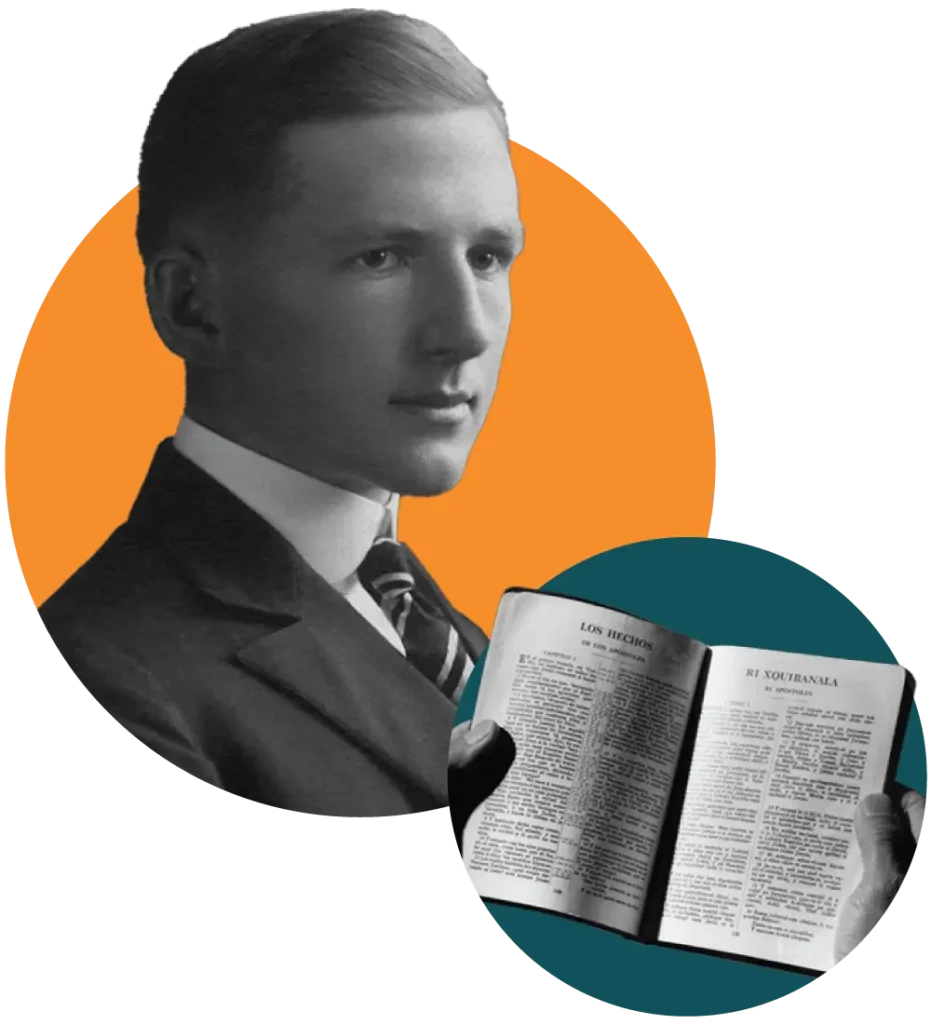
When 20-year-old William Cameron (“Cam”) Townsend went to Guatemala to give out Spanish Bibles, he was surprised when he met a man who didn't understand the language. This man didn't want a Spanish Bible or a God who didn't speak his language. That moment inspired Cam to take action.
And his story sparked a movement and vision that are rapidly changing the world!
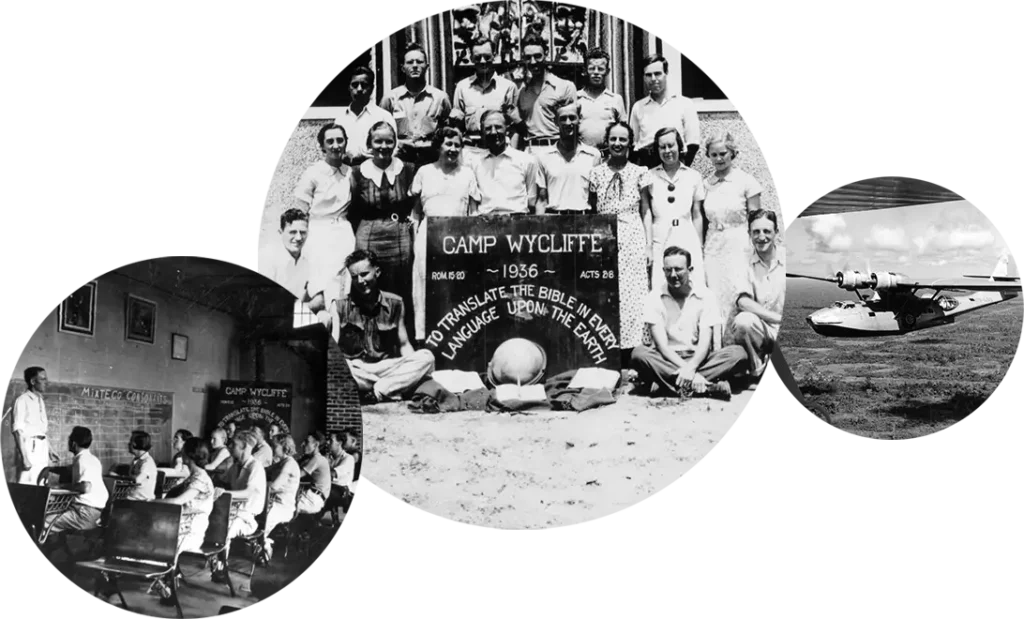
In 1934 Cam started Camp Wycliffe, a linguistics training program named after John Wycliffe, the first translator of the entire Bible into English.
Less than 10 years later, it grew into what would later be known as the Summer Institute of Linguistics (now SIL Global) and Wycliffe Bible Translators.
What started as a summer camp and became two global organizations has since spread to hundreds of partner organizations around the world who are working together to see the gospel go out among the nations.
Our Story
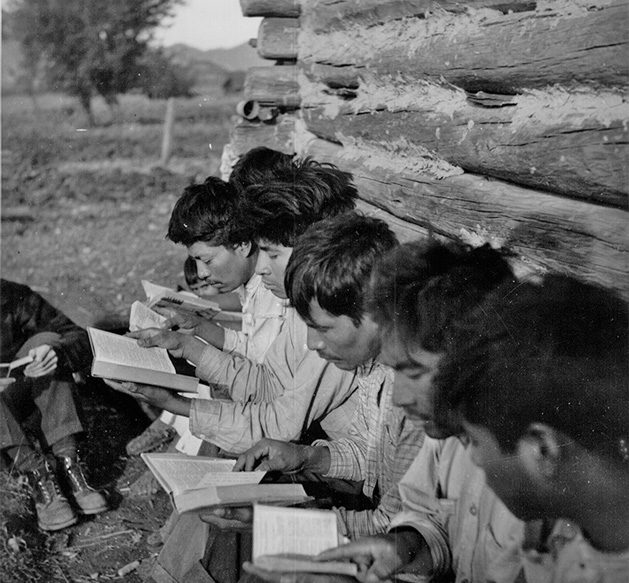
For more than 80 years, Wycliffe Bible Translators has helped people around the world translate the Bible into their own languages. What started as one young man’s vision that every man, woman and child would be able to understand God’s Word in their own language has grown into a global movement.
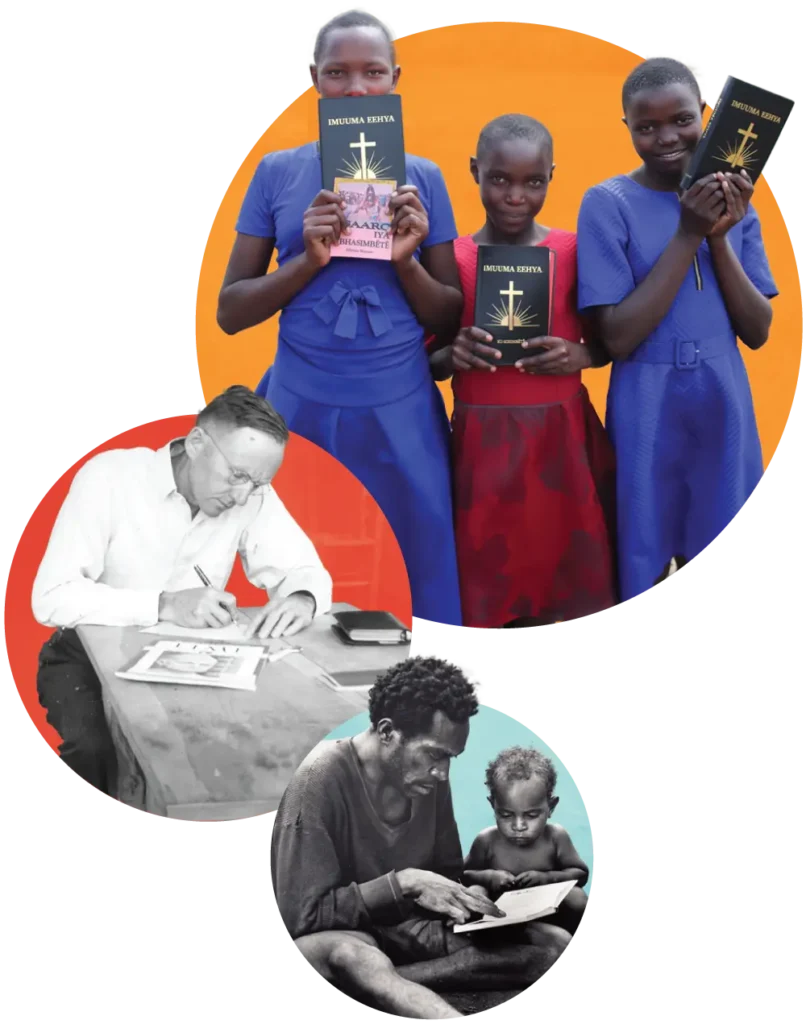
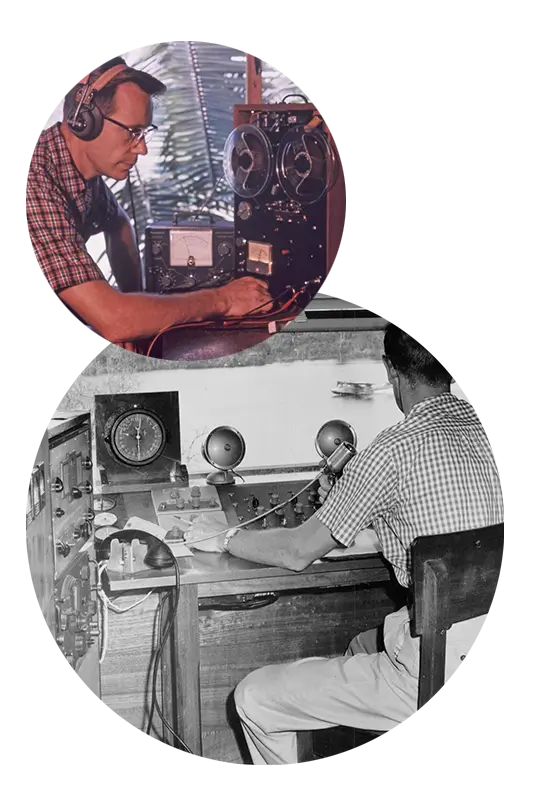
Throughout the decades, Wycliffe has pioneered new territory in missions. From single women working overseas in translation projects to the evolution of aviation and radio services to the growing prominence of community and church-led translation efforts, Wycliffe has changed a lot over the years.
Through every season, God has been faithful in continuing to lead us toward the vision of everyone having access to Scripture in a language and format that touches their heart.
Wycliffe Through the Years
1940s
Wycliffe Bible Translators officially became an organization in 1942.
Raising awareness of and participation in Bible translation, particularly in the Americas, was the focus.
1950s
Translation work expanded to regions like the Philippines and Vietnam.
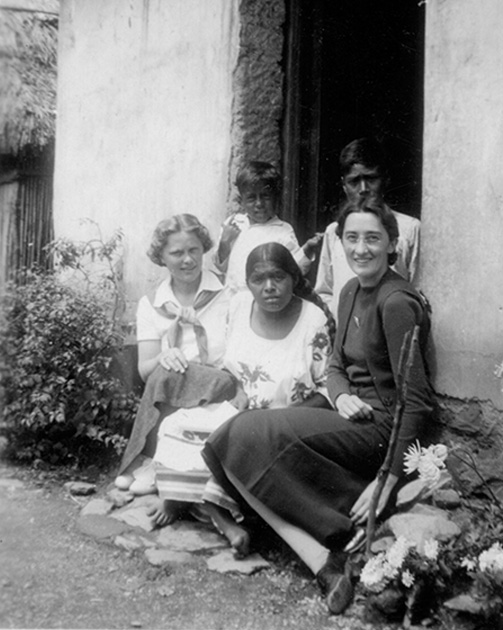
Many female translators joined, making it possible to work in previously inaccessible areas.
1960s
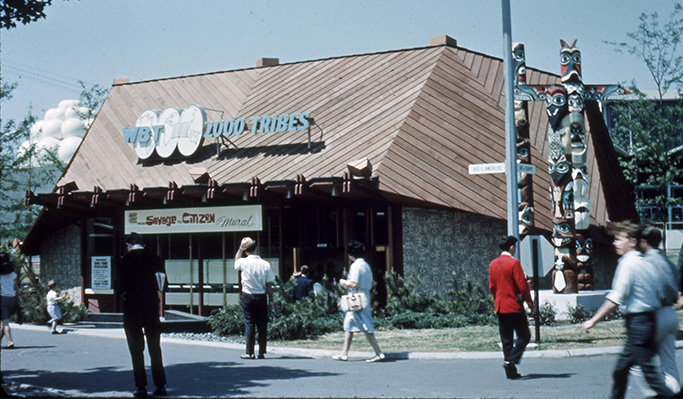
Wycliffe featured an exhibit at the 1964-1965 New York World’s Fair.
Sept. 30 was chosen as a day to honor the work of Bible translation, recognizing the vital role of translated Scripture in changing lives and bringing people closer to God.
1970s
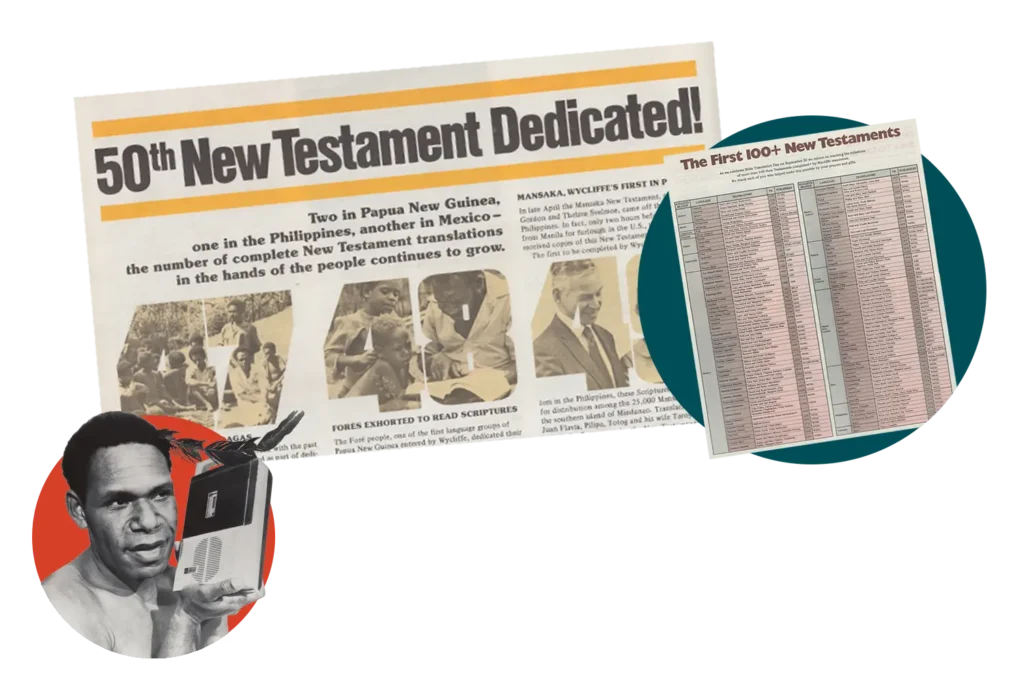
In July 1975, Wycliffe celebrated the dedication of its 50th New Testament translation, marking significant progress in Papua New Guinea, the Philippines and Mexico.
By 1979, Wycliffe celebrated the completion of more than the first 100 New Testaments.
1980s
The 1980s were marked by the celebration of Cameron Townsend’s 50-year milestone of service.
Cameron Townsend passed away.
Wycliffe made continued progress in Bible translation, impacting people worldwide.
1990s
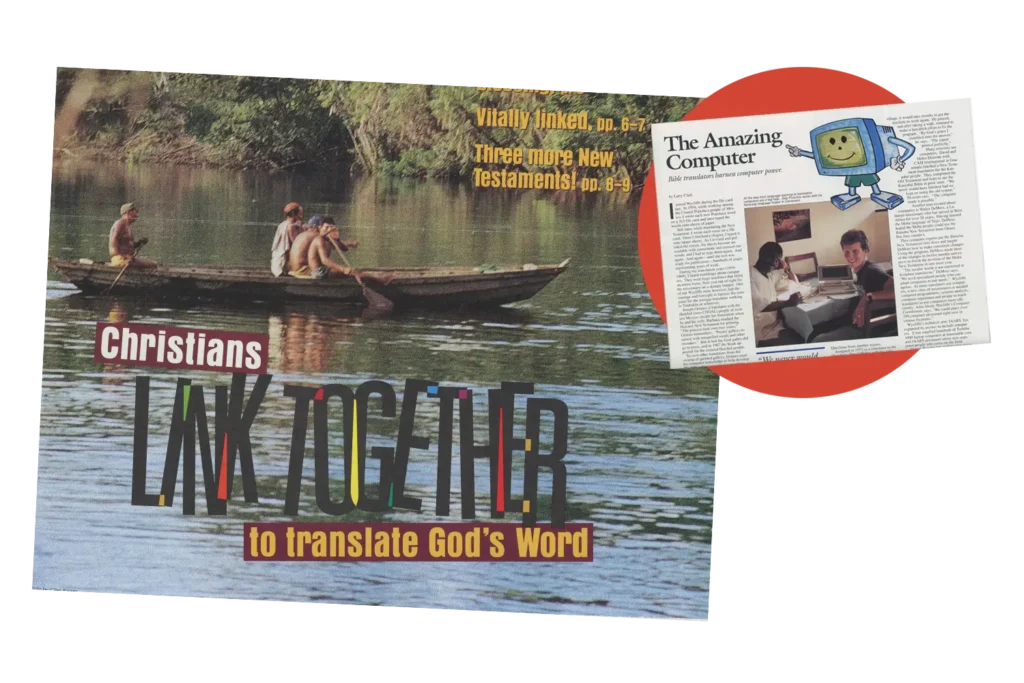
Advances in technology improved translation efficiency.
Cluster projects — translating multiple languages at a time — and an increase in roles for local translators emerged.
2000s
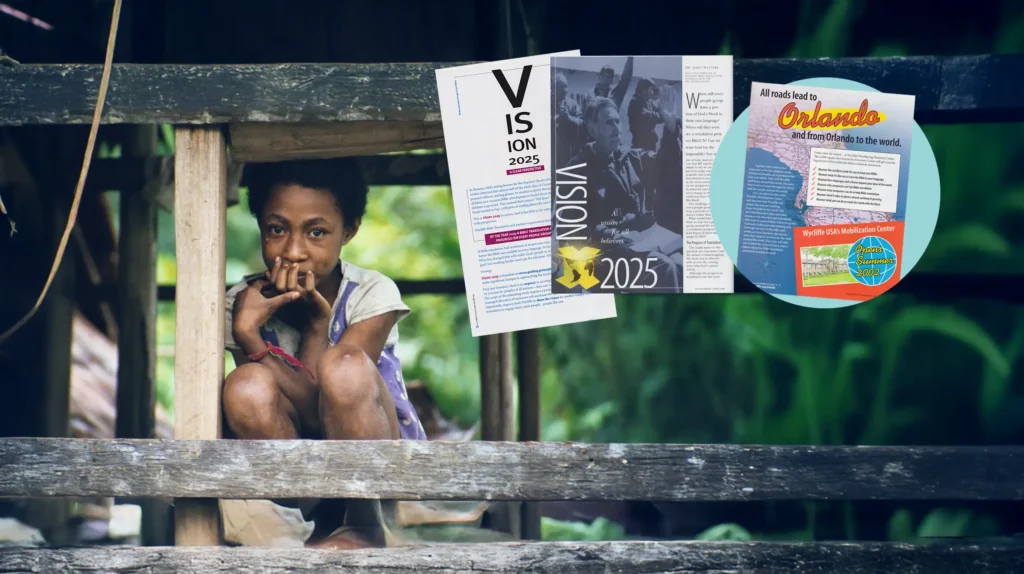
Wycliffe headquarters moved from California to Florida.
Wycliffe implemented Vision 2025: a goal to start a Bible translation in every language needing one by 2025.
2010s
Further technological advances and new partnerships with national organizations formed.
Wycliffe made progress toward reducing the number of languages needing translation.
2020s
While Vision 2025 — a God-sized vision to see a Bible translation in progress for every language still needing one by the year 2025 — was a critical mile marker in our Bible translation journey, it wasn’t the finish line; it was simply the starting point.
Today Wycliffe and our partners continue to work toward seeing God’s Word made available for all people, knowing that there is a promised future when people from every language will worship before the throne. That glorious picture, as described in Revelation 7:9, is a driving force in who we are and why we do what we do!
Our Work Is Not Over Yet!
The gospel is changing lives, communities and entire regions around the world as people experience it in their own language. Local churches are asking for — and sometimes even starting — Bible translation themselves. And they don’t want to wait for the work to start; they want to start it now!
Local churches are playing a significant role in Bible translation for their own communities. As they work with Bible translation organizations to see Scripture made available in the languages and formats they clearly understand, people are encountering Jesus and being transformed.
But Bible translation does not stop after Scripture is printed, recorded or dedicated. People need to engage with Scripture and apply it to their lives in order to experience sustained growth and transformation.
Every person who makes up the global Church should be equipped for evangelism, discipleship and church planting, and that starts by having full access to God’s Word in a language and format that captures their hearts. At Wycliffe, we want to leave a legacy of faith — where people continue to be transformed through the Bible for generations to come. So our work is not done yet!
As we move toward the promised future when people from all nations and languages will worship before the throne, God is at work, transforming lives today through Scripture — for His glory and the good of His people everywhere!