Stones of Remembrance: God Sightings Throughout His Master Story
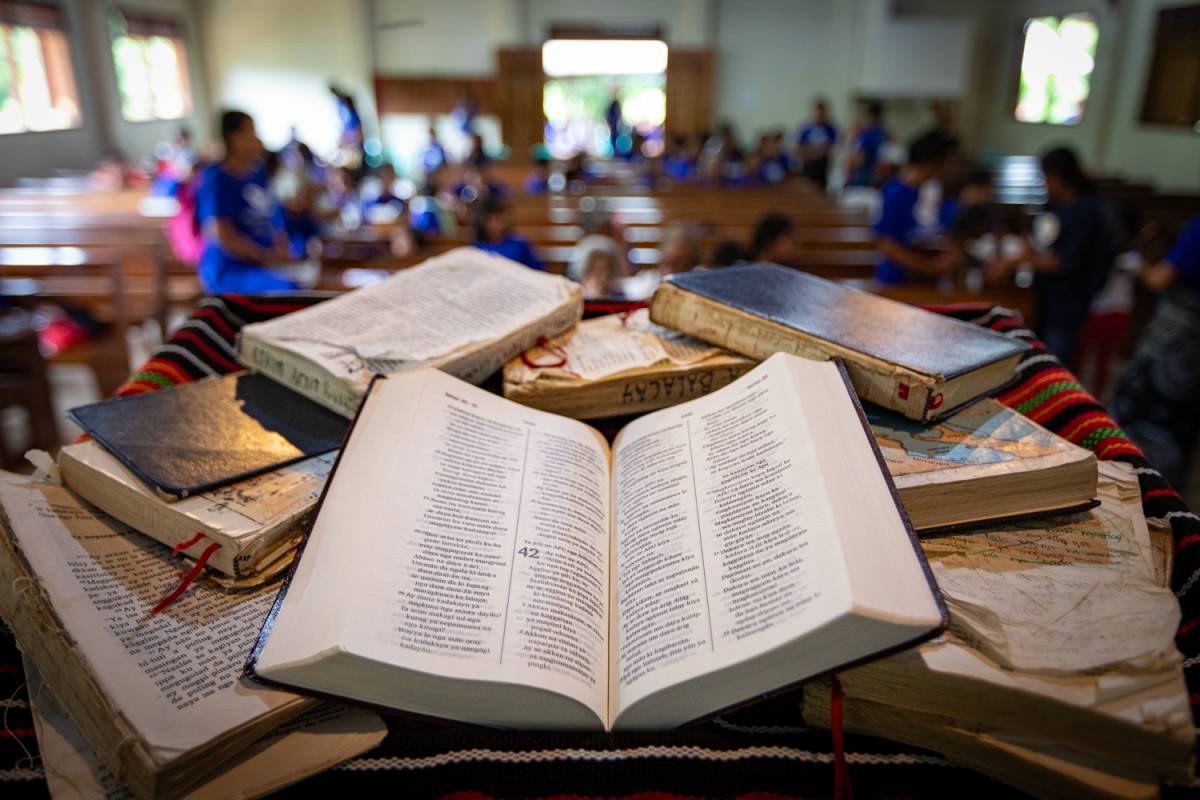
Have you ever encountered a situation where you could only declare, “That was God”?
As believers, we recognize that God is always moving. Throughout His Master Story of love and redemption that He is writing across time and history, incredible stories continue to unfold in ways that can only be attributed to Him!
Scripture shows us people who built physical markers to commemorate these stories — extraordinary moves of God — for future generations to see and reflect on. Their “stones of remembrance” pointed back to God’s faithfulness in the past, strengthening people’s trust that He would remain faithful in the future.
Establishing stones of remembrance isn’t some bygone practice from biblical times; it’s something that we can — and should! — still do today.
The beauty of reflecting on what God has done in the past is that each of our reflections will be unique, because our relationship with God is uniquely personal. Yet there are common threads across all our stories that culminate in a master tapestry depicting the beauty, might and faithfulness of the awesome God we serve.
Let’s look back and trace God’s faithfulness through some of the incredible events that have led us to where we are today, remembering and declaring together: “That was God at work. We can see it! And we trust that He’ll remain faithful.”
The Beginning of Language Diversity
Do you ever wonder what language God used when He spoke creation into existence? Only He knows! But we do know that Moses — the first human writer of God’s story — wrote in Hebrew.
Genesis 11:1 (NLT) says, “At one time all the people of the world spoke the same language and used the same words.” But that changed when the people, filled with pride, rebelled against God. They wanted to make a name for themselves and follow their own desires rather than God’s will (see Genesis 11:4). So God confused the people with different languages and scattered them throughout the Earth (see Genesis 11:7-8).
This act of pride and rebellion wasn’t small in impact. Ever since, the world has been filled with linguistic and cultural diversity — and great obstacles and challenges for anyone trying to communicate across different languages. But not too great for God. He understands every language and loves every person from every culture — and He wants us to understand Him too.
Read more about the history of Bible translation and the growth of the global Church →
The Gospel in Every Language
In Matthew 28:19, Jesus said, “Therefore, go and make disciples of all the nations, baptizing them in the name of the Father and the Son and the Holy Spirit” (NLT).
But how did Jesus expect them to make new disciples among all nations when languages were so diverse? How would it be possible to clearly share the Good News of the gospel with everyone without knowing every language? God’s answer was Pentecost.
The disciples were surrounded by numerous visitors who were in town for the festival of Pentecost. Jesus had promised the coming of the Holy Spirit, and in this setting, that promise was fulfilled in a dramatic way: “Suddenly, there was a sound from heaven like the roaring of a mighty windstorm, and it filled the house where they were sitting. Then, what looked like flames or tongues of fire appeared and settled on each of them” (Acts 2:2-3, NLT).
The disciples began speaking in other languages immediately, and the crowd understood the disciples’ messages about the wonderful things God had done!
The Holy Spirit empowered the disciples to bridge linguistic divisions to tell all people in Jerusalem about Jesus in a language that made sense in both their minds and hearts. Through this, people had the opportunity to respond to the Good News of Jesus Christ.
And Pentecost wasn’t just a miracle of communication; it was the birth of the global Church — the moment when the gospel began to cross borders, languages and cultures. This miraculous event revealed a deep truth:
Trace the work of the Holy Spirit from Acts 2 to today in a 7-day devotional →
Early Bible Translations
The Septuagint, the first five books of the Hebrew Bible, were translated into Greek in the third century B.C., and the remainder of the Old Testament was translated over the two centuries that followed.
When the New Testament books were first written, Greek was the language of scholarship, and the authors used a more common, everyday version of it, which made it valuable for early Christian missions. Soon, translations of the Bible were also made into Latin (the language of Rome), Coptic (a language of Egypt) and Syriac (a language of Syria) and were used in churches. Other early translations included the Gothic Bible and the Armenian Bible.
Around A.D. 382, Pope Damasus I assigned a scholar priest named Jerome to create an official translation of the full Bible into Latin. It took Jerome 27 years to complete the work, and his translation was known as the Vulgate. It served as the standard version of the Bible in Western Europe for the next 1,000 years.
During the Middle Ages, only scholars could read and understand Latin; thus, for the most part, only scholars could read and understand the Bible. Then in the 1380s, John Wycliffe decided to remedy that. He didn’t want to learn about God from only his priest; he wanted to study Scripture for himself! So John Wycliffe translated the Bible into English so that people from all walks of life could engage with it.
Scripture for Every Heart, Everywhere
Beginning in 1917, a young man named William Cameron Townsend felt fueled by a vision to obey Jesus’ command to make disciples of all nations. He moved to Guatemala and soon learned about the Cakchiquel people. They asked Cam something that really made him think: Why didn’t God speak their language? Was He only the God of English and Spanish speakers?
This moved Cam, who deep down thought everyone — men, women and children — should be able to read God’s Word in their own language. So, although it would take almost 10 years of his life, he decided to learn the complex Cakchiquel language, create an alphabet and translate the New Testament for them.
When he was done, the Cakchiquel finally had God’s Word, but thousands of other languages still needed it. In 1934 Cam started Camp Wycliffe, a linguistic training program named after John Wycliffe. And less than 10 years later, the humble training camp had grown into two affiliate organizations: Wycliffe Bible Translators USA and the Summer Institute of Linguistics (now SIL Global).
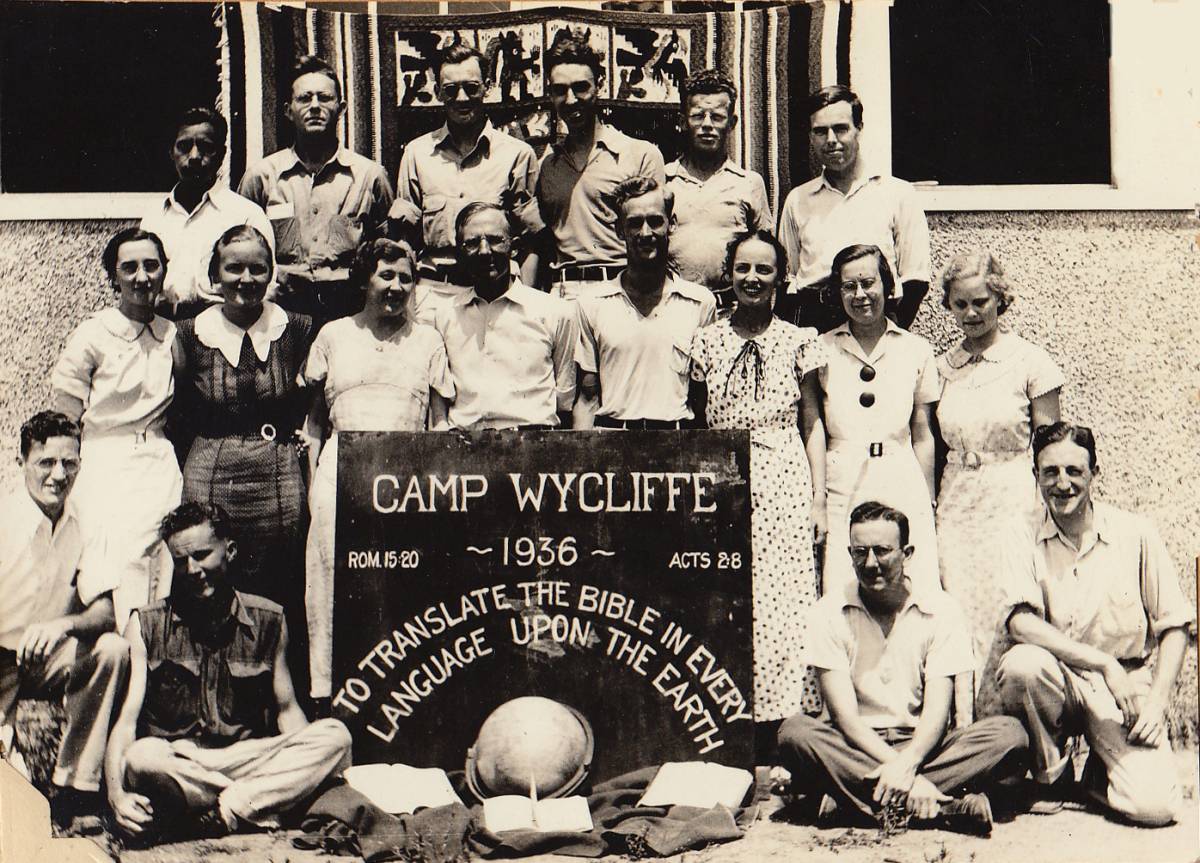
Cam’s work in translating the Bible for the Cakchiquel was just the beginning! Since then, God has drawn the hearts of many others to join the Bible translation movement, and today, more than a century later, Wycliffe USA serves as a catalyst, coming alongside the global Church and these like-minded partners to advance the mission.
Today, Bible translation is underway in more languages than ever before, making God’s Word accessible to individuals, families and communities in ways that capture their hearts and transform their lives forever.
See the incredible progress happening in Bible translation around the world →
Living Stones of Remembrance
As believers, we have the opportunity not only to look back at what God has done in the past but also to look forward prayerfully to what He’ll do in the future. When we do, we become, in essence, living stones of remembrance.
The thing about remembering is that it requires us to slow down, pause or even stop, and reflect. And in today’s day and age, where things are only getting faster, it can be easy to walk away from this habit.
But what might your walk with Jesus look like if you began intentionally weaving in moments like this into your day — to stop and reflect on the ways God has moved in your life? Maybe you’d see how:
- That season of heartache you had to walk through humbled you enough to admit that you couldn’t do it without God’s strength
- That closed door was God’s way of directing you along a path that was even better
- That opportunity was used by God to multiply your efforts so that His Kingdom could flourish in ways you’d never imagined
We all have stories that declare God’s faithfulness. When we are willing to slow down and look for His fingerprints, we find them all over our situations, seasons and journeys.
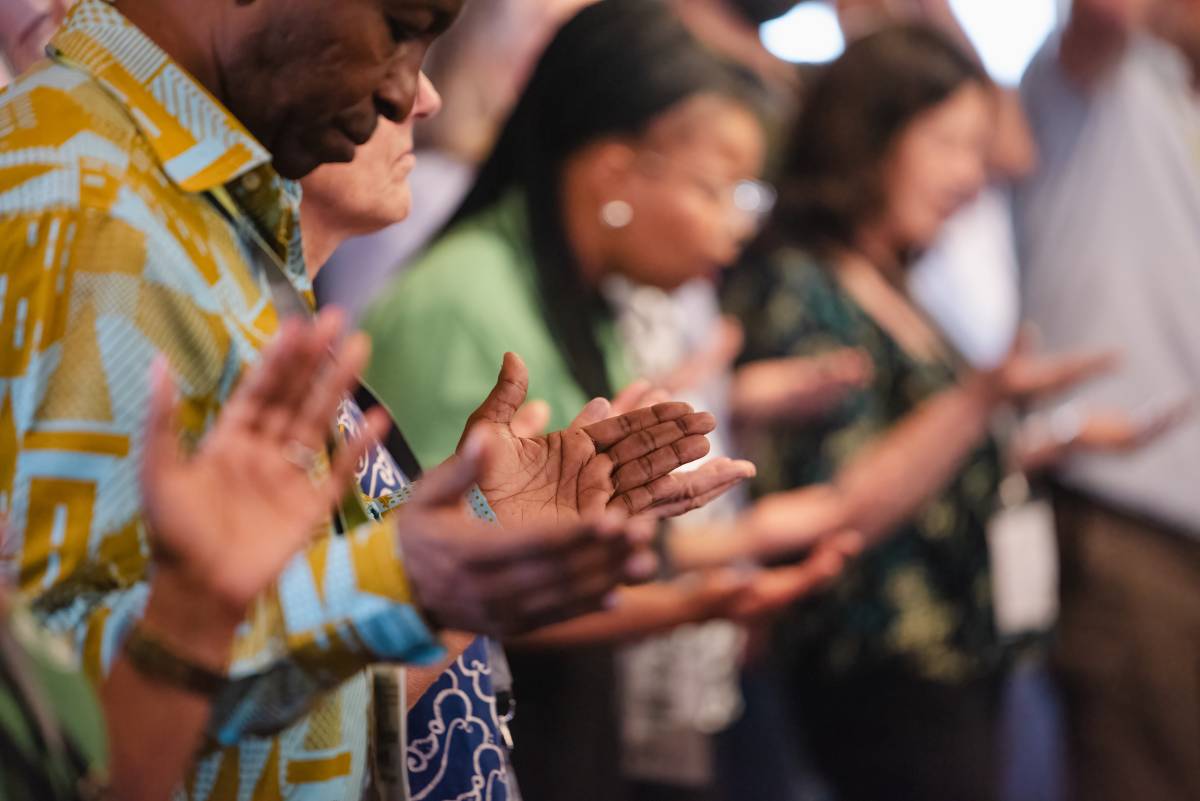
Take a moment to reflect on your personal stones of remembrance. Where do you see God showing up and moving today? And how can declaring what He’s done in the past encourage you to trust that He will continue to demonstrate his goodness and faithfulness in the future?
After all, if God loved the world enough to send His one and only Son, then He loves you enough to be writing for you a masterful story that will be for your ultimate good and His ultimate glory.

Where Have You Seen God at Work?
Take a moment to reflect on your own stones of remembrance. What experience has reminded you of God’s faithfulness or helped you recognize His hand at work? We’d love to hear your story! Share it with us at [email protected].
Related Stories